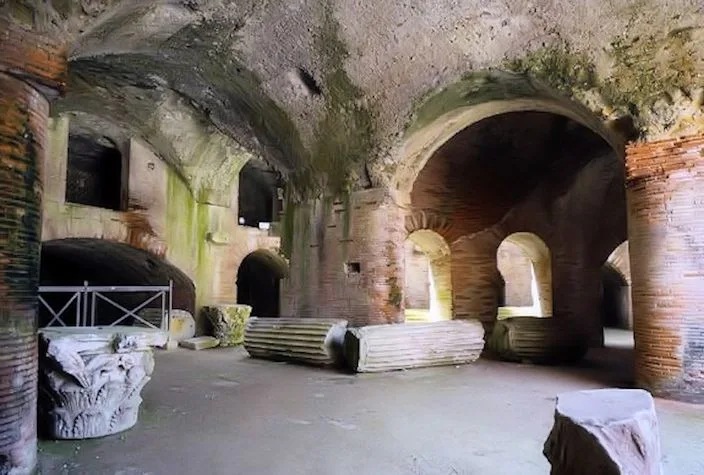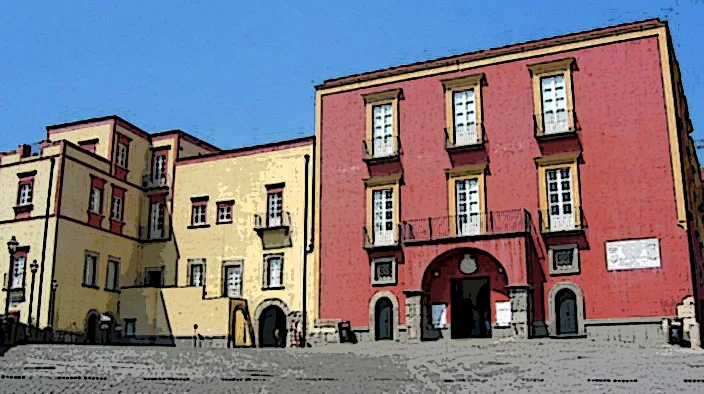
The Smaller Amphitheatre recalls an earlier chapter in the history of public spectacles at Puteoli.
LISTEN TO THE STORY
Audio guide
Voice settings
Read the transcript
Before the great amphitheatre, Puteoli already had a venue for public spectacles.
The Park dates construction to the late Republic and early Augustan period. The building used the natural slope to support its seating, unlike the larger amphitheatre, and lacked its elaborate underground level. The twentieth-century railway interrupted the ancient layout.
The remains are fragmentary; comparison with the larger building helps explain urban transformation.
Today the smaller monument is fragmentary: its story helps us understand the changing city without entering private or restricted areas.
History
The Park dates construction to the late Republic and early Augustan period. The building used the natural slope to support its seating, unlike the larger amphitheatre, and lacked its elaborate underground level. The twentieth-century railway interrupted the ancient layout.
The remains are fragmentary; comparison with the larger building helps explain urban transformation.
What to notice
- The conceptual difference between slope-supported seating and built supporting structures.
- The relationship between ancient remains and the modern city, through authorised documentation.
Frequently asked questions
Is it part of the Flavian Amphitheatre?
No, it is a separate and earlier building.
Can I visit?
A public tourist entrance has not been verified.