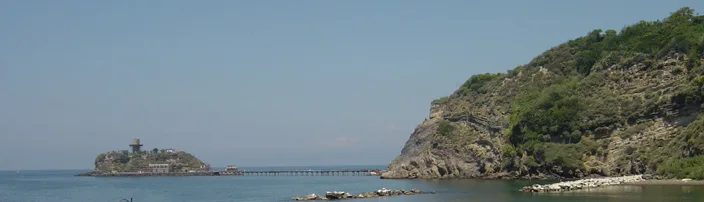
Monte di Vita Fumo offers a way to interpret the volcanic relief of Monte di Procida.
LISTEN TO THE STORY
Audio guide
Voice settings
Read the transcript
Monte di Vita Fumo offers a way to interpret the volcanic relief of Monte di Procida.
The Vesuvius Observatory identifies Vita Fumo among traces of ancient volcanic centres in the area. The regional park records its territorial significance in the general reserve list. A volcanic hill does not necessarily retain its original shape: erosion, coastal change and human activity can alter it.
Vita Fumo introduces the distinction between eruption products and the landscape seen today. Linking individual outcrops to particular ages and events requires geological maps and specific studies. This guide does not identify sampling locations or encourage collecting rocks; it offers a framework for later verified illustrations.
Volcanoes build hills and deposits, while other processes reshape them over time.
Geological research helps reconstruct these stages, but it does not establish whether a path is safe.
History
The Vesuvius Observatory identifies Vita Fumo among traces of ancient volcanic centres in the area. The regional park records its territorial significance in the general reserve list. A volcanic hill does not necessarily retain its original shape: erosion, coastal change and human activity can alter it.
Vita Fumo introduces the distinction between eruption products and the landscape seen today. Linking individual outcrops to particular ages and events requires geological maps and specific studies. This guide does not identify sampling locations or encourage collecting rocks; it offers a framework for later verified illustrations.
What to notice
- The hill’s form in documentary images
- The relationship between hill and coast
Frequently asked questions
Can I visit?
Boundaries, access and trails require verification; no hike is proposed.