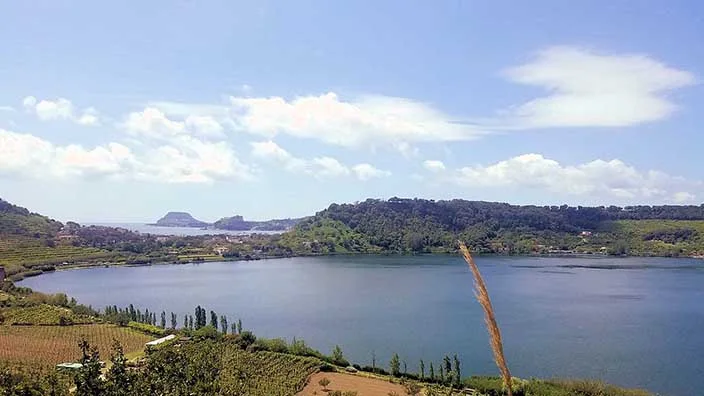
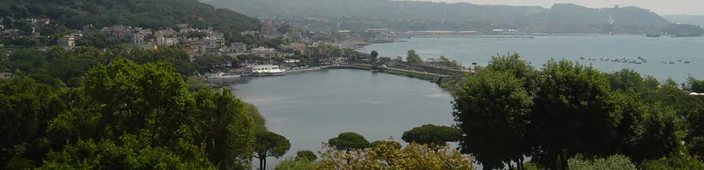
Monte Nuovo recalls the 1538 eruption and reveals the geological processes that shape the Phlegraean Fields.
LISTEN TO THE STORY
Audio guide
Voice settings
Read the transcript
A mountain born in a matter of days: this is the story that makes Monte Nuovo a symbol of the Phlegraean Fields.
In 1538 an eruption sequence created the landform now known as Monte Nuovo. Researchers have reconstructed the event by studying volcanic material alongside contemporary documents. INGV research shows that significant ground deformation had already affected the landscape before the eruption; the new cone also changed the connection between Avernus and the sea.
The episode matters because it belongs to documented history rather than prehistoric geology alone. Historical evidence helps scientists understand volcanic processes, but does not automatically predict the system’s future behaviour. Vegetation does not make Monte Nuovo an extinct volcano: it belongs to an active caldera.
This guide therefore separates the historical eruption from current access conditions. Hiking requires confirmed permission, reliable information on trail conditions and compliance with official restrictions.
The 1538 eruption transformed the coast and left a landform recognisable today.
Researchers compare rocks, deposits and written evidence to understand what happened.
Discover its story while respecting official instructions; no audio guide can replace an authoritative notice.
Respect the site’s protection rules and use only authorised access and services.
History
In 1538 an eruption sequence created the landform now known as Monte Nuovo. Researchers have reconstructed the event by studying volcanic material alongside contemporary documents. INGV research shows that significant ground deformation had already affected the landscape before the eruption; the new cone also changed the connection between Avernus and the sea.
The episode matters because it belongs to documented history rather than prehistoric geology alone. Historical evidence helps scientists understand volcanic processes, but does not automatically predict the system’s future behaviour. Vegetation does not make Monte Nuovo an extinct volcano: it belongs to an active caldera.
This guide therefore separates the historical eruption from current access conditions. Hiking requires confirmed permission, reliable information on trail conditions and compliance with official restrictions.
What to notice
- The cone’s outline from a permitted viewpoint
- Its relationship with nearby lakes
- The landform on geological maps
Photo gallery
1 photo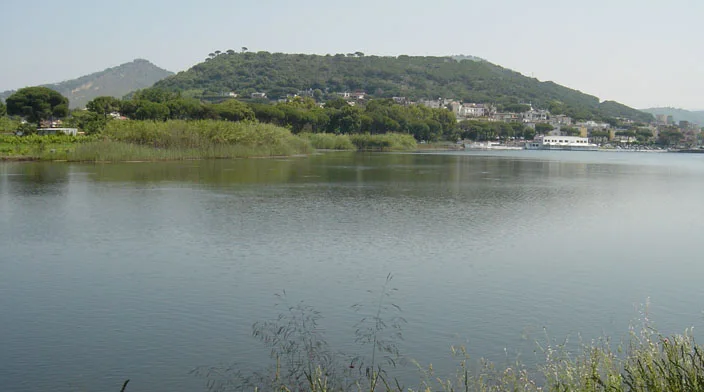
Frequently asked questions
Can I visit this place?
Access, trail conditions, restrictions and permissions need confirmation; do not assume the summit or crater is accessible.