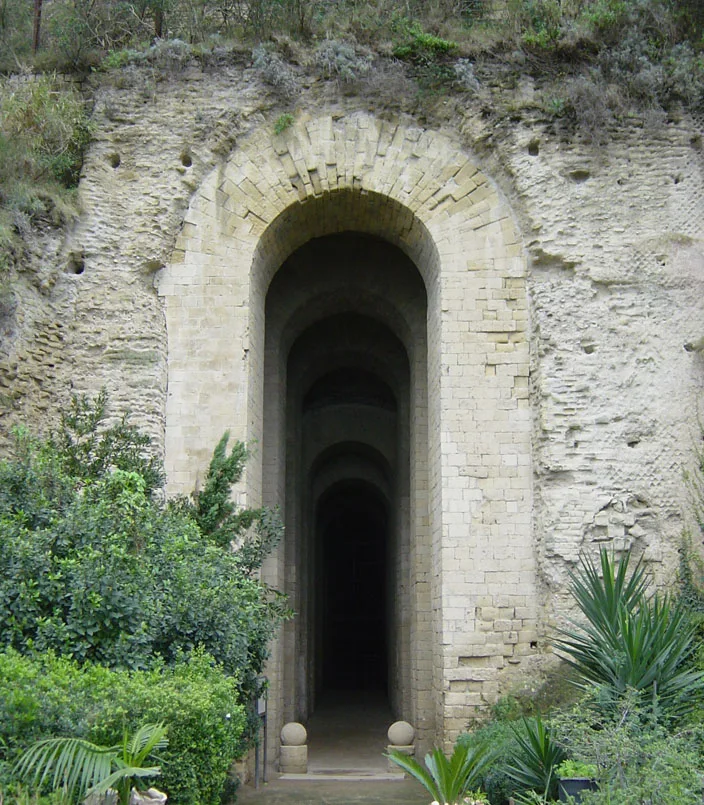
Pausilypon reveals the Roman art of living at Posillipo, where a residence and the seascape formed a single architectural vision.
LISTEN TO THE STORY
Audio guide
Voice settings
Read the transcript
Pausilypon reveals the Roman art of living at Posillipo, where a residence and the seascape formed a single architectural vision.
Pausilypon began in the first century BC as the residence of the Roman equestrian Publius Vedius Pollio. On his death it became imperial property. Rather than a single palace, imagine a series of spaces spread over the hillside towards the sea.
Buildings for performances, reception rooms, baths and waterfront structures reveal the varied purposes of the estate. The theatre and odeon, distinct in form and function, offer two ways of understanding its archaeological remains. The Seiano tunnel connects the villa to the Coroglio side of the hill.
Its Greek name evokes relief from cares, a useful introduction to the Roman ideal of otium: time away from public duties, devoted to private life and culture. The site has never been fully excavated. Archaeological investigation and conservation have revealed only portions of a much larger estate.
Submerged remains within the nearby Gaiola park provide another perspective on this shared history, but the marine reserve is not the same visitor site as the land-based archaeological park. Both deserve to be understood together while keeping their access arrangements separate.
Pausilypon tells that story through performance spaces, reception rooms and waterfront remains.
Its theatre and odeon remind us of the place of culture in a grand villa, while Gaiola reveals how the relationship between buildings and the sea has changed.
This guide is designed to help you discover the site remotely as well. Respect closures and access restrictions.
History
Pausilypon began in the first century BC as the residence of the Roman equestrian Publius Vedius Pollio. On his death it became imperial property. Rather than a single palace, imagine a series of spaces spread over the hillside towards the sea.
Buildings for performances, reception rooms, baths and waterfront structures reveal the varied purposes of the estate. The theatre and odeon, distinct in form and function, offer two ways of understanding its archaeological remains. The Seiano tunnel connects the villa to the Coroglio side of the hill.
Its Greek name evokes relief from cares, a useful introduction to the Roman ideal of otium: time away from public duties, devoted to private life and culture. The site has never been fully excavated. Archaeological investigation and conservation have revealed only portions of a much larger estate.
Submerged remains within the nearby Gaiola park provide another perspective on this shared history, but the marine reserve is not the same visitor site as the land-based archaeological park. Both deserve to be understood together while keeping their access arrangements separate.
What to notice
- Architecture shaped by the hillside
- Theatre and odeon as distinct spaces
- Historical links to submerged heritage
Photo gallery
2 photos
Frequently asked questions
Was it a private villa?
Initially owned by Vedius Pollio, it later became an imperial residence.
Can I visit now?
The operator announces the closure of Pausilypon from 1 October 2026 for restoration and safety works; no reopening date was found. Explore remotely; do not plan a visit.