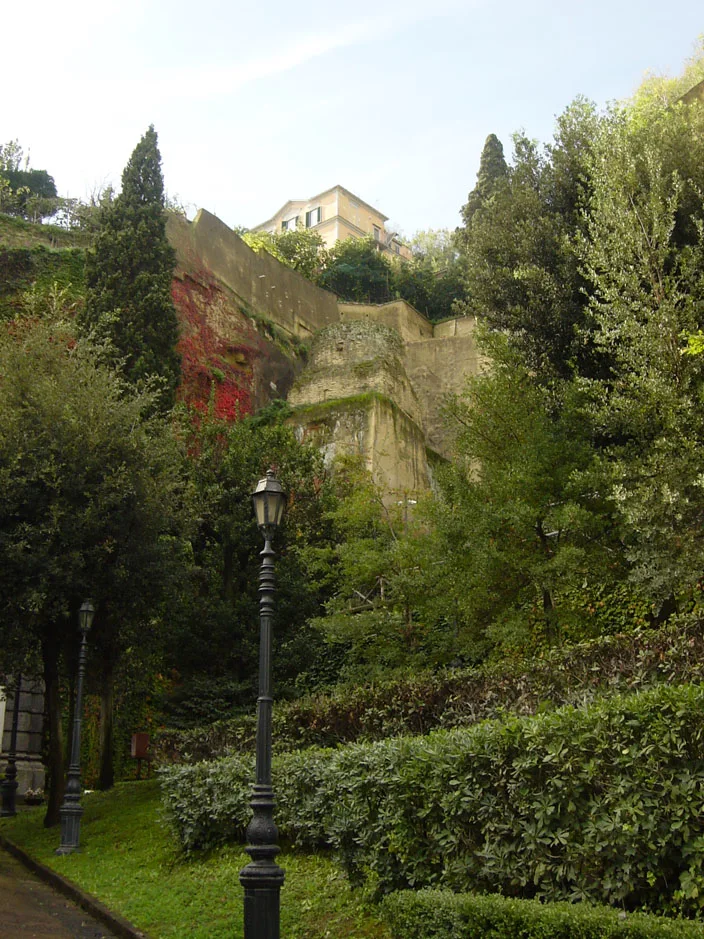
The tomb traditionally attributed to Virgil connects Roman funerary heritage with the memory of the poet of the Aeneid.
LISTEN TO THE STORY
Audio guide
Voice settings
Read the transcript
The tomb traditionally attributed to Virgil connects Roman funerary heritage with the memory of the poet of the Aeneid.
The tomb is a Roman funerary monument dating to the early imperial period, built using opus reticulatum masonry. Its identification as Virgil’s burial place is not supported by conclusive archaeological evidence. Its significance also lies in the reception of the poet: generations of readers have associated Naples with his memory.
Medieval stories portrayed Virgil as a magician and protector of the city; these are traditions, not established events. The park’s landscaping in 1930 reinforced the monument’s commemorative role.
This tomb is Roman, but there is no definitive proof that Virgil was buried here.
Knowing the difference between established evidence and what has been passed down makes the monument even more interesting.
This guide is designed to help you discover the site remotely as well. Respect closures and access restrictions.
History
The tomb is a Roman funerary monument dating to the early imperial period, built using opus reticulatum masonry. Its identification as Virgil’s burial place is not supported by conclusive archaeological evidence. Its significance also lies in the reception of the poet: generations of readers have associated Naples with his memory.
Medieval stories portrayed Virgil as a magician and protector of the city; these are traditions, not established events. The park’s landscaping in 1930 reinforced the monument’s commemorative role. GoFlegrei therefore distinguishes the Roman structure, its traditional attribution and later legends.
What to notice
- Roman masonry
- Funerary function
- Difference between attribution and evidence
Frequently asked questions
Is it certainly Virgil’s tomb?
No: the attribution is traditional.
Can I visit?
Access path restricted by the notice of 12 September 2026; reopening not confirmed.