The Capitolium reveals the relationship between religion and civic identity in the Forum of Cumae.
LISTEN TO THE STORY
Audio guide
Voice settings
Read the transcript
The Capitolium reveals the relationship between religion and civic identity in the Forum of Cumae.
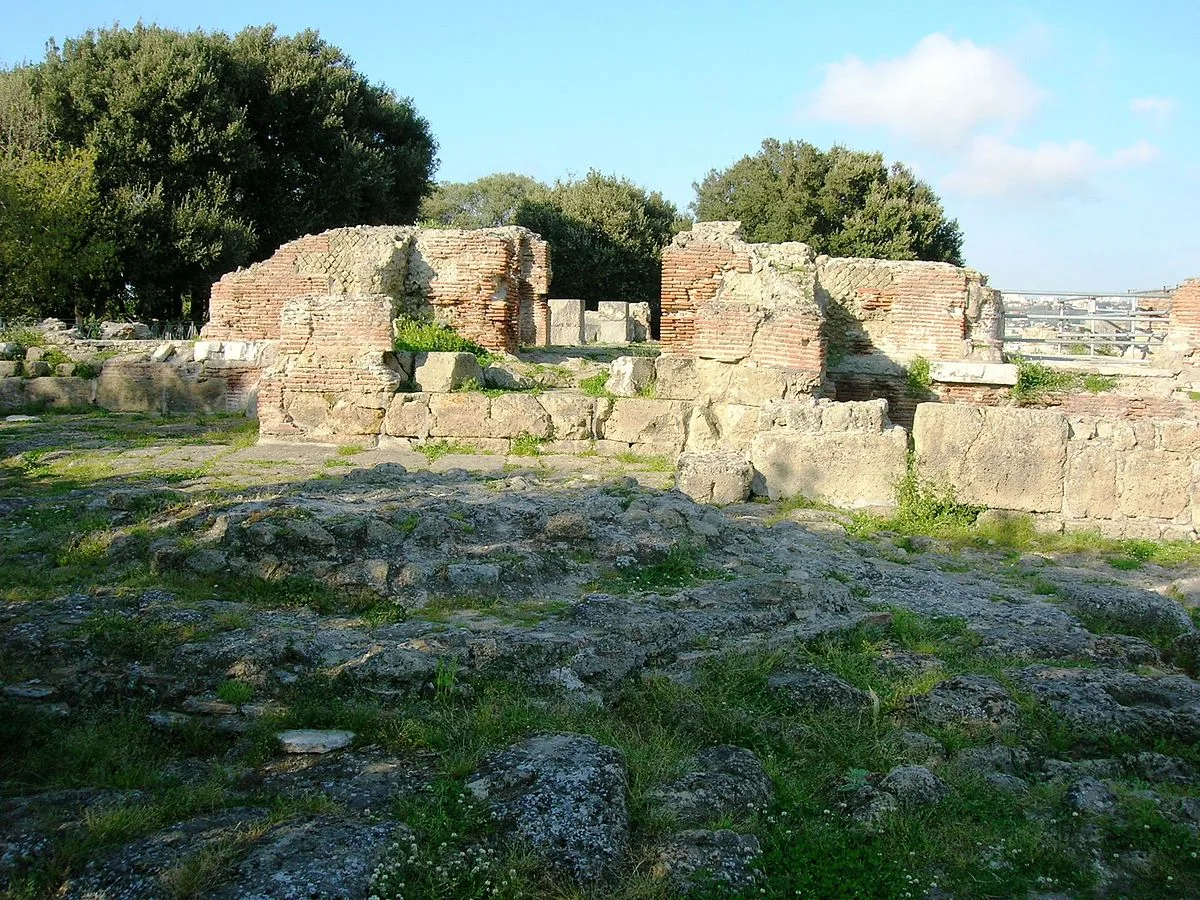
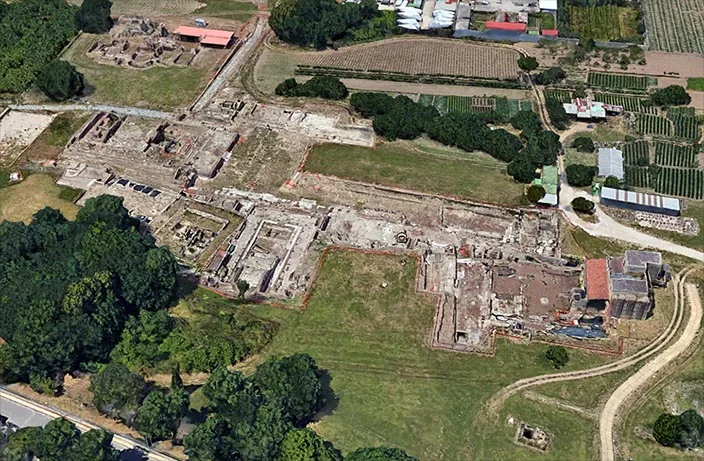
Federico II University documentation places the sanctuary on the eastern side of the square. Its name refers to the Capitoline Triad, Jupiter, Juno and Minerva, and to the role of public cults in Roman tradition. The architectural relationship between sanctuary and square is important to understanding the complex’s political and religious meaning.
Excavations in the Forum help distinguish earlier stages of the town from later monumental development. Do not confuse the Capitolium with the upper acropolis sanctuary traditionally called the Temple of Jupiter.
The Capitolium invites us to read the Forum as a place of collective representation.
Do not confuse it with the acropolis temples: these are different contexts, revealing different ways of organising urban life and worship.
History
Federico II University documentation places the sanctuary on the eastern side of the square. Its name refers to the Capitoline Triad, Jupiter, Juno and Minerva, and to the role of public cults in Roman tradition. The architectural relationship between sanctuary and square is important to understanding the complex’s political and religious meaning.
Excavations in the Forum help distinguish earlier stages of the town from later monumental development. Do not confuse the Capitolium with the upper acropolis sanctuary traditionally called the Temple of Jupiter.
What to notice
- The sanctuary in relation to the square.
- The distinction between civic cults and the acropolis sanctuaries.
Frequently asked questions
Is it the Temple of Jupiter on the acropolis?
No, it is the sanctuary of the Forum in the lower town.
Does it have a separate entrance?
No independent visitor entrance is documented.