Two reservoirs, tunnels and vaults reveal the life of a Roman villa and the challenge of storing fresh water.
LISTEN TO THE STORY
Audio guide
Voice settings
Read the transcript
The name Cento Camerelle suggests a labyrinth.
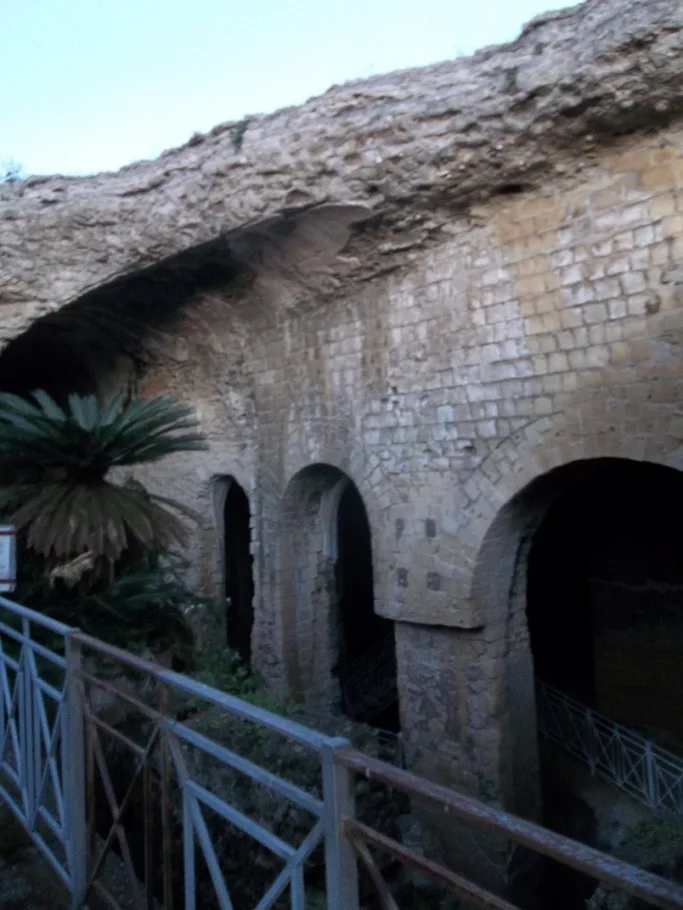
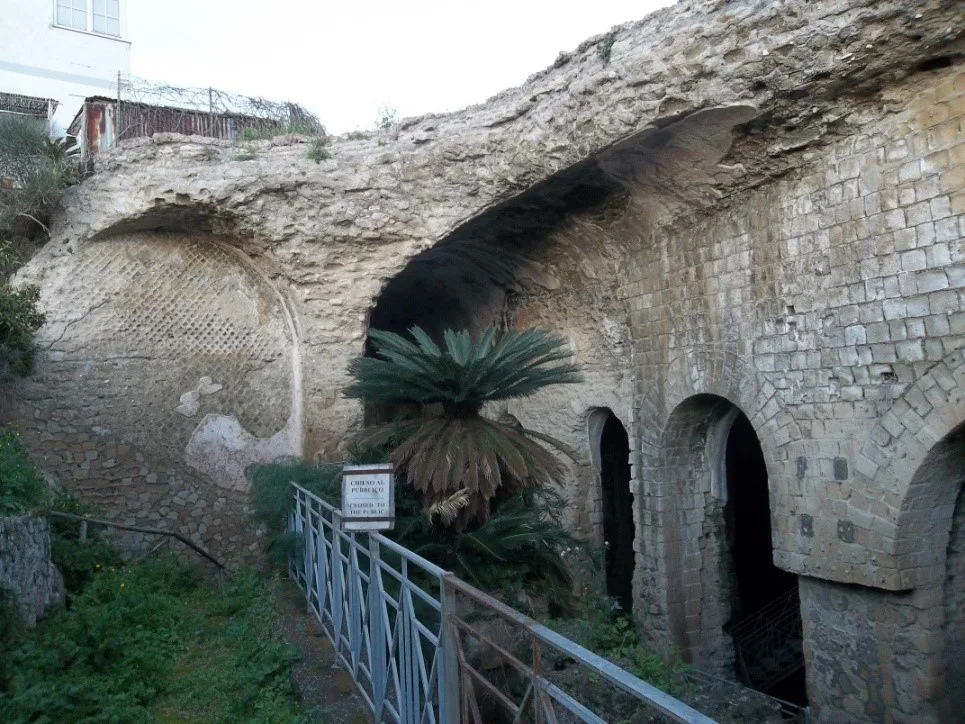
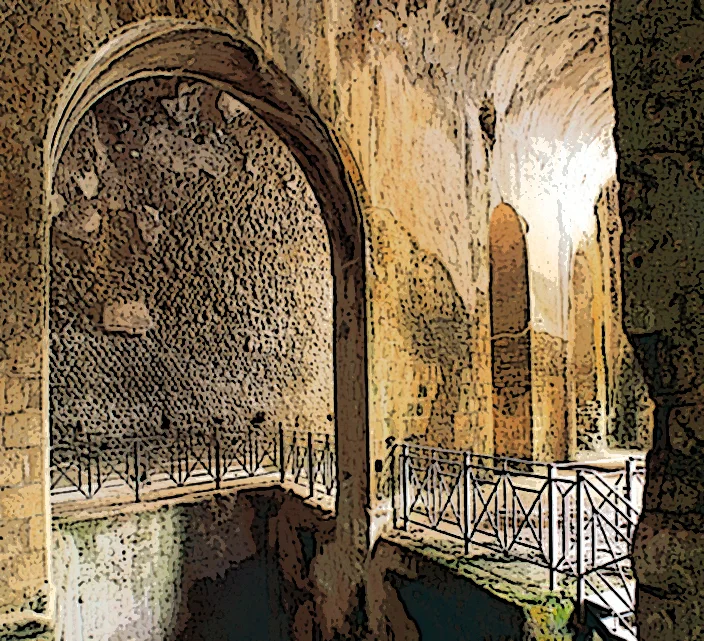
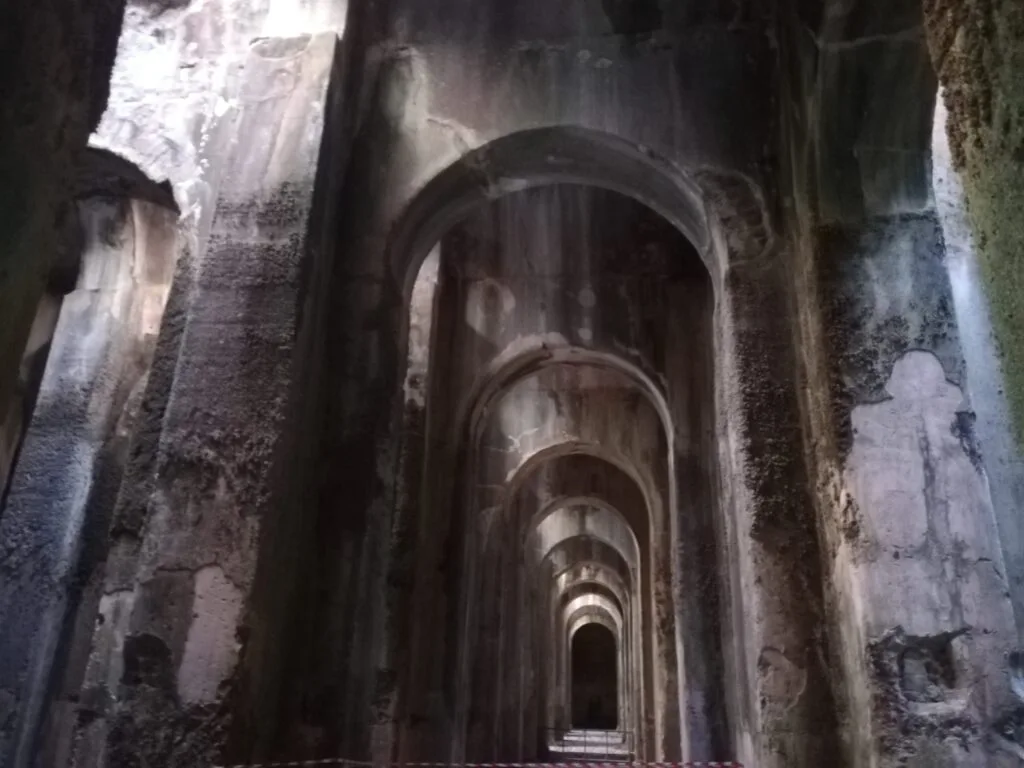
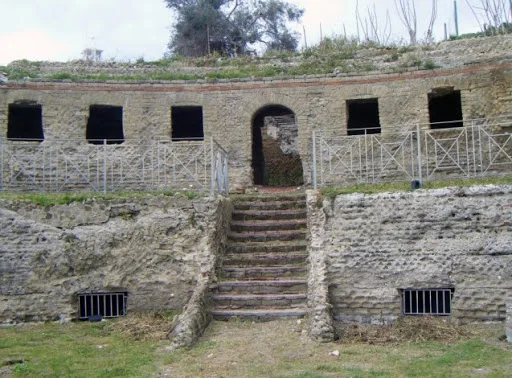
The complex comprises two independent structures built at different times. The upper imperial-period cistern has four aisles beneath vaulted ceilings. Below lies a network of Republican-period passages, only partly explored.
Waterproof coatings attest to the water-storage function. Remains of a villa and coastal fishponds help place the monument in its residential setting. Attribution of the villa to famous ancient figures remains hypothetical.
In later centuries the site drew Grand Tour travellers; the archaeological park identifies an inscription left by painter Allan Ramsay, dated 1737.
In fact, the complex tells us mainly about water management.
Two systems constructed at different times occupy superimposed levels, showing how the needs of a Roman residence could change.
Wall coatings provide valuable clues to the purpose of the spaces.
Those marks now form part of the heritage: observe them without touching or adding new inscriptions.
History
The complex comprises two independent structures built at different times. The upper imperial-period cistern has four aisles beneath vaulted ceilings. Below lies a network of Republican-period passages, only partly explored.
Waterproof coatings attest to the water-storage function. Remains of a villa and coastal fishponds help place the monument in its residential setting. Attribution of the villa to famous ancient figures remains hypothetical.
In later centuries the site drew Grand Tour travellers; the archaeological park identifies an inscription left by painter Allan Ramsay, dated 1737.
What to notice
- The different layouts of the two levels, where access is permitted
- Traces of waterproof coatings and historical visits
Photo gallery
4 photos