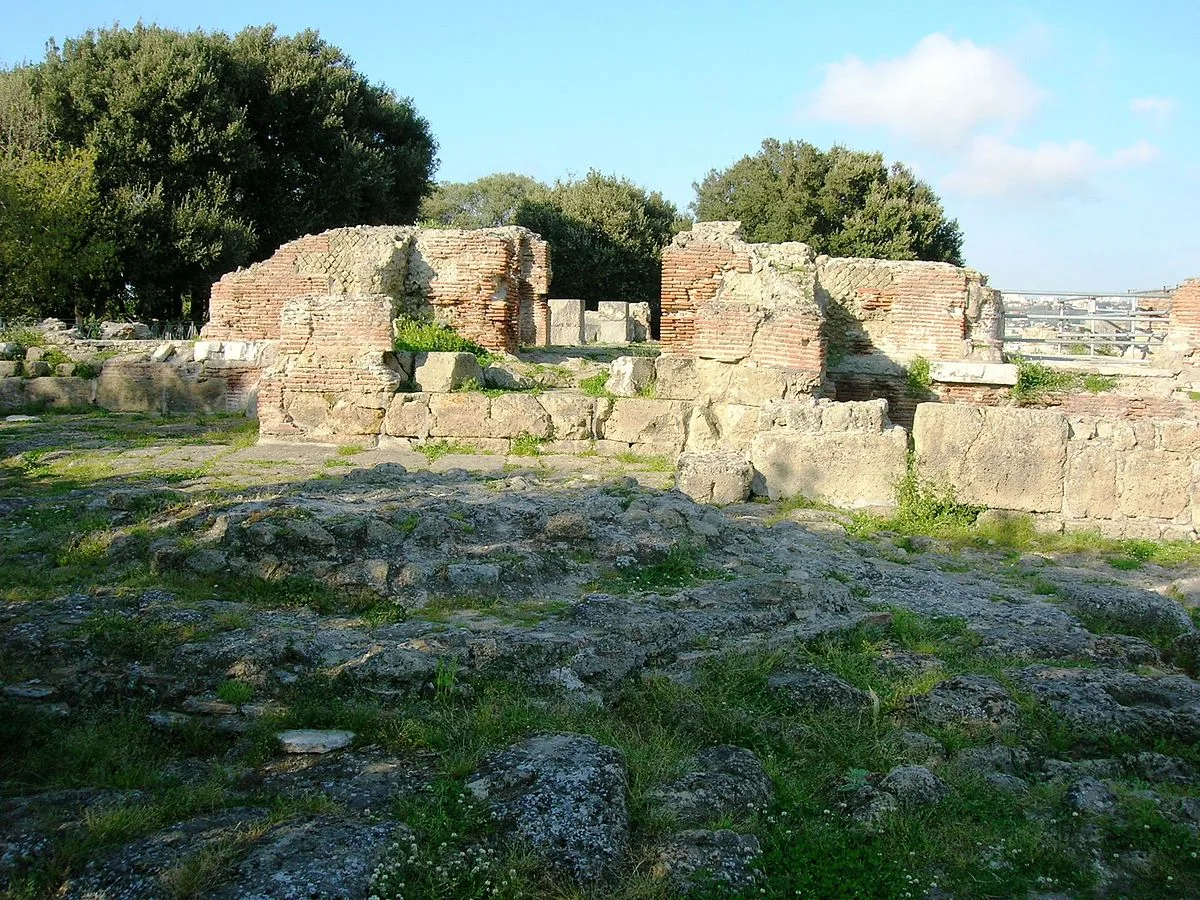
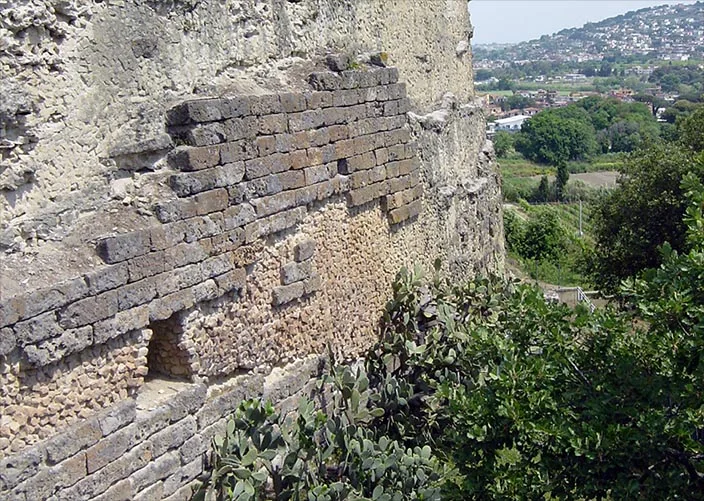
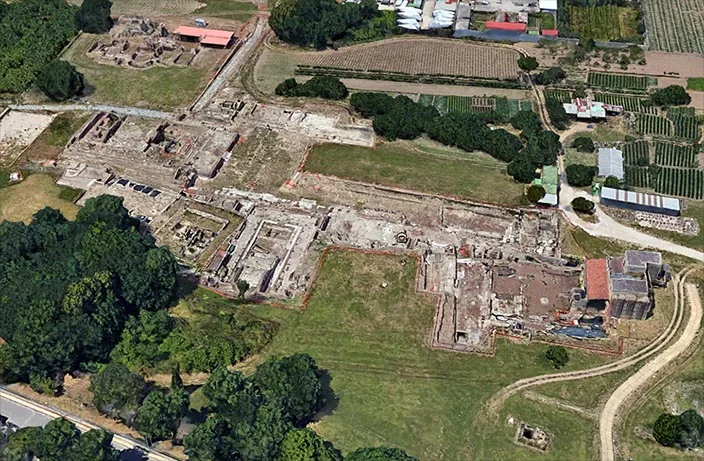
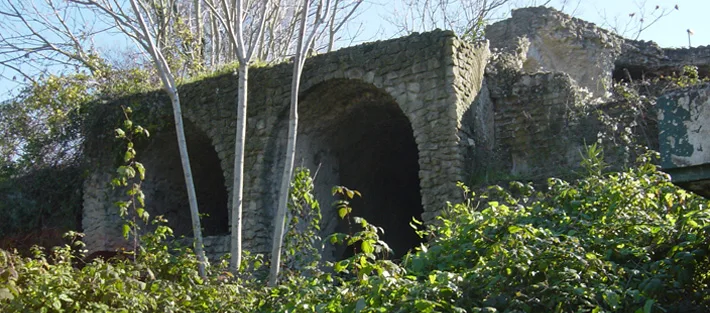
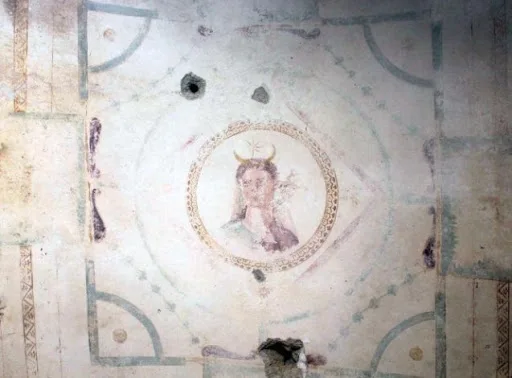
Cumae’s monumental necropolis preserves a long history of burials and changes in the ways its inhabitants were remembered.
LISTEN TO THE STORY
Audio guide
Voice settings
Read the transcript
The land outside Cumae’s walls was not static.
Centre Jean Bérard research outside the northern fortifications documents a complex sequence: Iron Age burials, Greek and Samnite sacred places, Roman tombs and later activities. Excavations near the Median Gate show how some funerary buildings were replaced by Imperial-period developments. The remains do not all belong to the same era, nor did every structure serve a funerary purpose.
This is a research context best understood through specialist publications.
Different generations left burials, sacred places and traces of activity.
Archaeologists reconstruct these changes by comparing evidence above and below different layers.
The necropolis tells us not only about death but also how a community transformed its surroundings.
History
Centre Jean Bérard research outside the northern fortifications documents a complex sequence: Iron Age burials, Greek and Samnite sacred places, Roman tombs and later activities. Excavations near the Median Gate show how some funerary buildings were replaced by Imperial-period developments. The remains do not all belong to the same era, nor did every structure serve a funerary purpose.
This is a research context best understood through specialist publications.
What to notice
- Position relative to the walls
- Different phases of land use
- Relationship with the Median Gate
Photo gallery
1 photo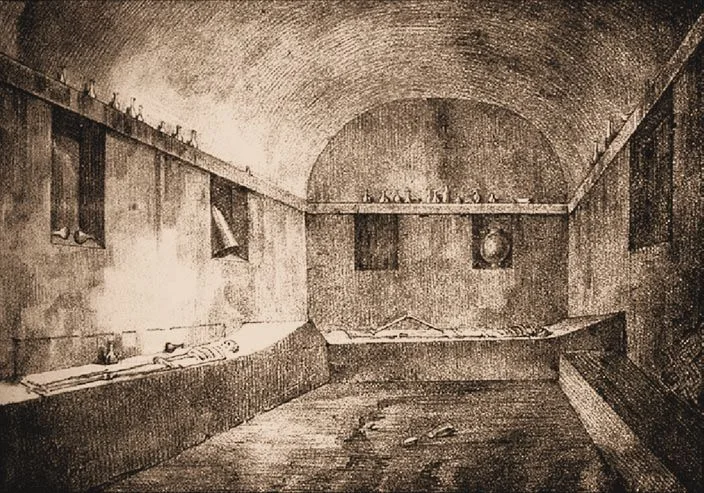
Frequently asked questions
Are all the remains Roman tombs?
No, research documents different periods and functions.
Can I visit?
Digital guide. The operator restricts the lower town to special openings; access to this structure is unconfirmed. No verified independent entrance.