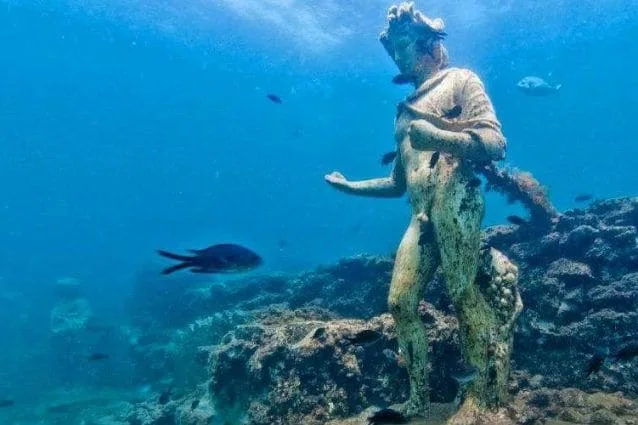
The Punta Epitaffio nymphaeum reveals the relationship between sculpture, myth and architecture in a submerged Roman setting.
LISTEN TO THE STORY
Audio guide
Voice settings
Read the transcript
The Punta Epitaffio nymphaeum reveals the relationship between sculpture, myth and architecture in a submerged Roman setting.
The nymphaeum forms part of the submerged heritage of Baia. Recovered sculptures including Odysseus, Antonia Minor and Dionysus are documented in the museum catalogue. Odysseus and his companion evoke the episode of Polyphemus.
The statues belonged to an architectural setting designed to connect figures and space. The museum reconstruction helps explain this context, while the original site lies in a protected marine area. Recovered originals must not be confused with any replicas in situ.
The museum allows us to rediscover the connection between these figures and their original setting.
You do not need to enter the water to learn this story.
Respect the site’s protection rules and use only authorised access and services.
History
The nymphaeum forms part of the submerged heritage of Baia. Recovered sculptures including Odysseus, Antonia Minor and Dionysus are documented in the museum catalogue. Odysseus and his companion evoke the episode of Polyphemus.
The statues belonged to an architectural setting designed to connect figures and space. The museum reconstruction helps explain this context, while the original site lies in a protected marine area. Recovered originals must not be confused with any replicas in situ.
What to notice
- The relationship between niches and figures in the reconstruction.
- The provenance of sculptures in the museum catalogue.
Photo gallery
1 photo
Frequently asked questions
Where are the objects held?
The official catalogue associates them with Baia’s museum; current display needs confirmation.
Can I access it independently?
No independent access is suggested; check authorised arrangements and regulations.