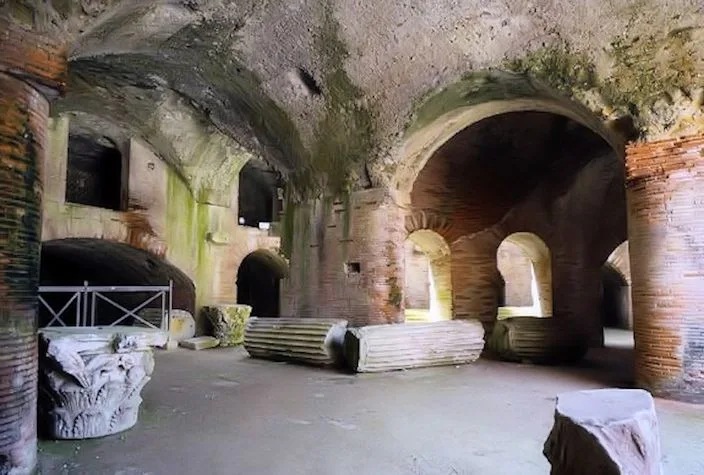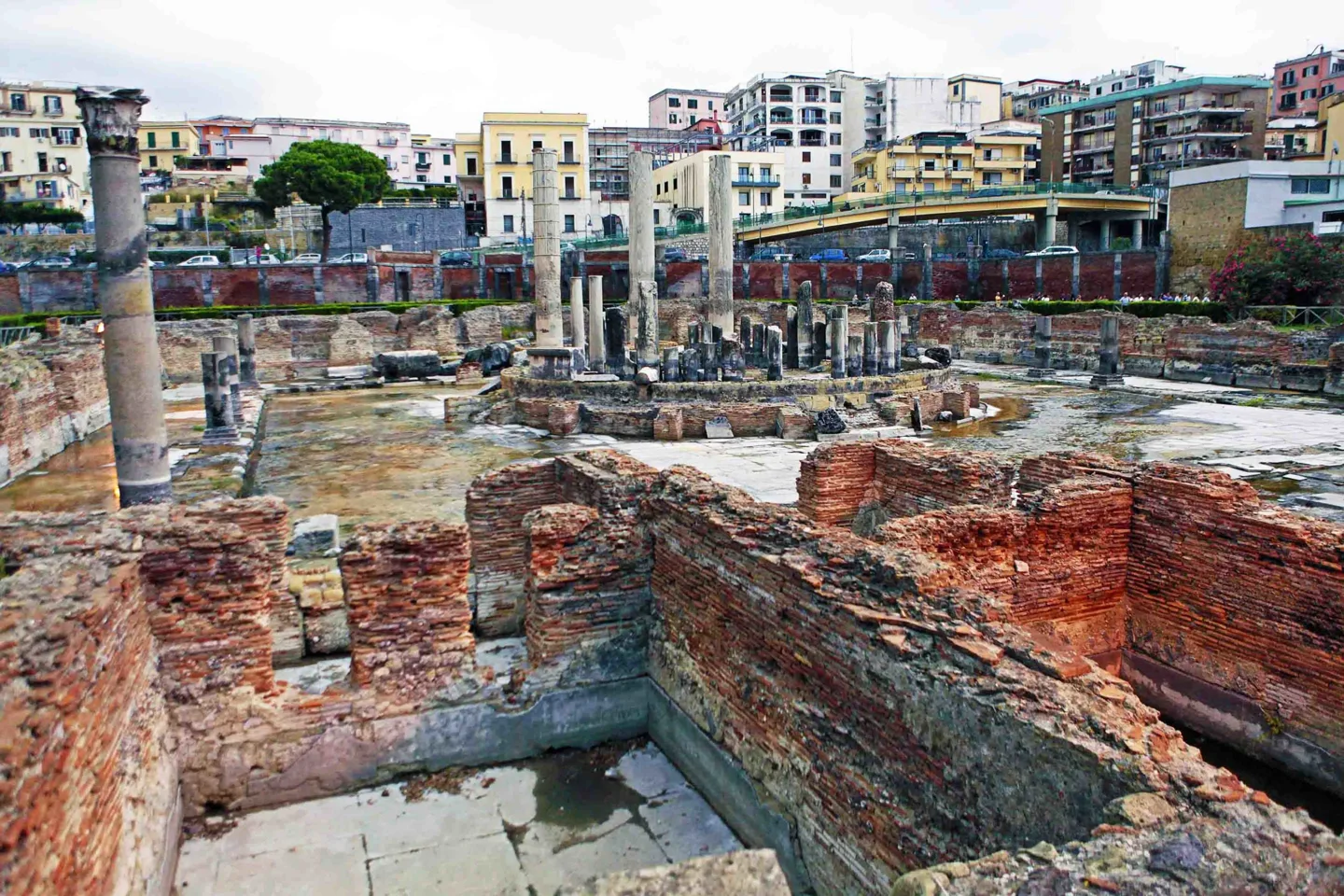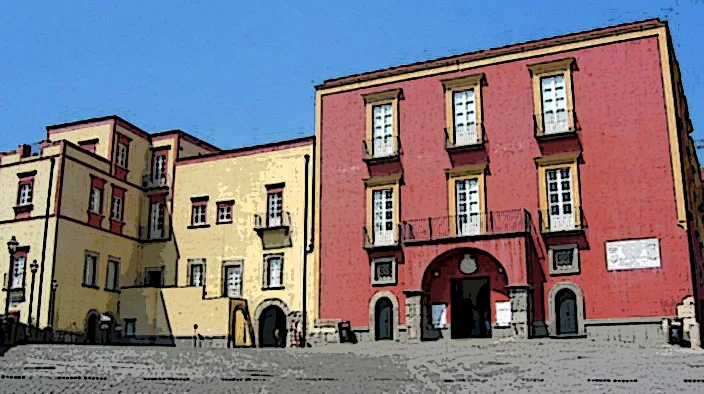
Beneath Rione Terra lies another face of Pozzuoli: streets and workplaces preserve the memory of Roman Puteoli.
LISTEN TO THE STORY
Audio guide
Voice settings
Read the transcript
Beneath Rione Terra lies another face of Pozzuoli: streets and workplaces preserve the memory of Roman Puteoli.
The Roman colony founded in 194 BC grew into a major regional port. Remains beneath the headland reveal the arrangement of streets and building blocks. Shops, storage areas and bread-making facilities illuminate everyday life.
The archaeological route was extended in 2021. Its relationship with the cathedral above shows how ancient buildings were incorporated into later structures. The historic district and the underground route are connected but have distinct access arrangements.
Rione Terra also tells the story of everyday work: bread, trade and movement through the streets.
The remains of Puteoli remind us that cities are shaped by their inhabitants.
Later buildings grew above these structures, leaving a layered history.
This guide is designed to help you discover the site remotely as well. Respect closures and access restrictions.
History
The Roman colony founded in 194 BC grew into a major regional port. Remains beneath the headland reveal the arrangement of streets and building blocks. Shops, storage areas and bread-making facilities illuminate everyday life.
The archaeological route was extended in 2021. Its relationship with the cathedral above shows how ancient buildings were incorporated into later structures. The historic district and the underground route are connected but have distinct access arrangements.
What to notice
- Roman street layout
- Mills and working spaces
- Layers of ancient and modern urban life
Frequently asked questions
Is this the historic district itself?
No. It is a separate archaeological experience beneath the district.
Is it open?
The Ministry lists it as closed; official reopening confirmation is needed.