The columns of Pozzuoli’s Macellum tell two stories: a Roman marketplace and the changing ground levels of the Phlegraean region.
LISTEN TO THE STORY
Audio guide
Voice settings
Read the transcript
The Temple of Serapis was not a temple: it was the public market of Puteoli.
In the heart of Pozzuoli, the Macellum evokes the wealth of ancient Puteoli, a Roman trading port. A statue of Serapis discovered during Bourbon excavations inspired the enduring name Temple of Serapis. Later research identified its actual function as a public market. Shops surrounded a porticoed courtyard with a circular structure at the centre, and marble reflected the town’s prosperity.
Small holes left by marine molluscs on the columns record periods when seawater reached the structures. These traces have made the monument an important landmark in the history of Phlegraean ground movement. They do not by themselves indicate present volcanic conditions or predict future events. Here archaeology and geology together reveal the changing coastline.
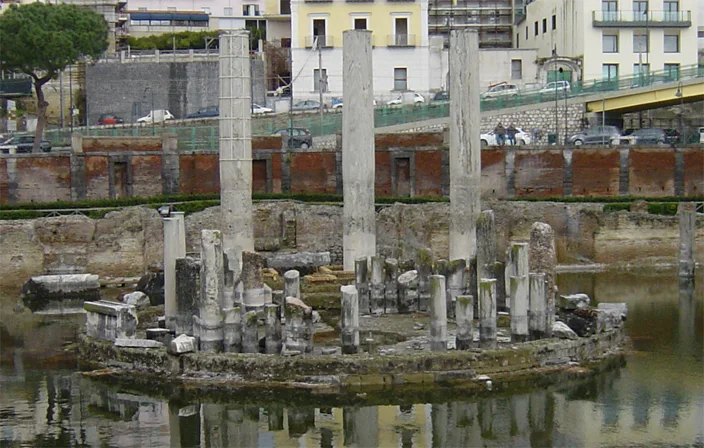
Shops occupied three sides of the market courtyard, opening onto interior and exterior spaces. A circular tholos with a fountain stood at its centre. Holes left by marine organisms in the columns preserve evidence of changes in relative sea level.
A statue discovered during excavation gave it the name still used today.
The columns hold another clue: tiny holes made by marine organisms.
This is why the Macellum tells both the story of Roman commerce and that of ground movement in the Phlegraean Fields.
This guide is designed to help you discover the site remotely as well. Respect closures and access restrictions.
History
A market, not a temple
In the heart of Pozzuoli, the Macellum evokes the wealth of ancient Puteoli, a Roman trading port. A statue of Serapis discovered during Bourbon excavations inspired the enduring name Temple of Serapis. Later research identified its actual function as a public market. Shops surrounded a porticoed courtyard with a circular structure at the centre, and marble reflected the town’s prosperity.
Columns that record ground movement
Small holes left by marine molluscs on the columns record periods when seawater reached the structures. These traces have made the monument an important landmark in the history of Phlegraean ground movement. They do not by themselves indicate present volcanic conditions or predict future events. Here archaeology and geology together reveal the changing coastline.
A closer look
Shops occupied three sides of the market courtyard, opening onto interior and exterior spaces. A circular tholos with a fountain stood at its centre. Holes left by marine organisms in the columns preserve evidence of changes in relative sea level.
Read more ↗What to notice
- Monumental columns
- Courtyard and circular structure
- Traces of marine organisms on marble
Photo gallery
2 photos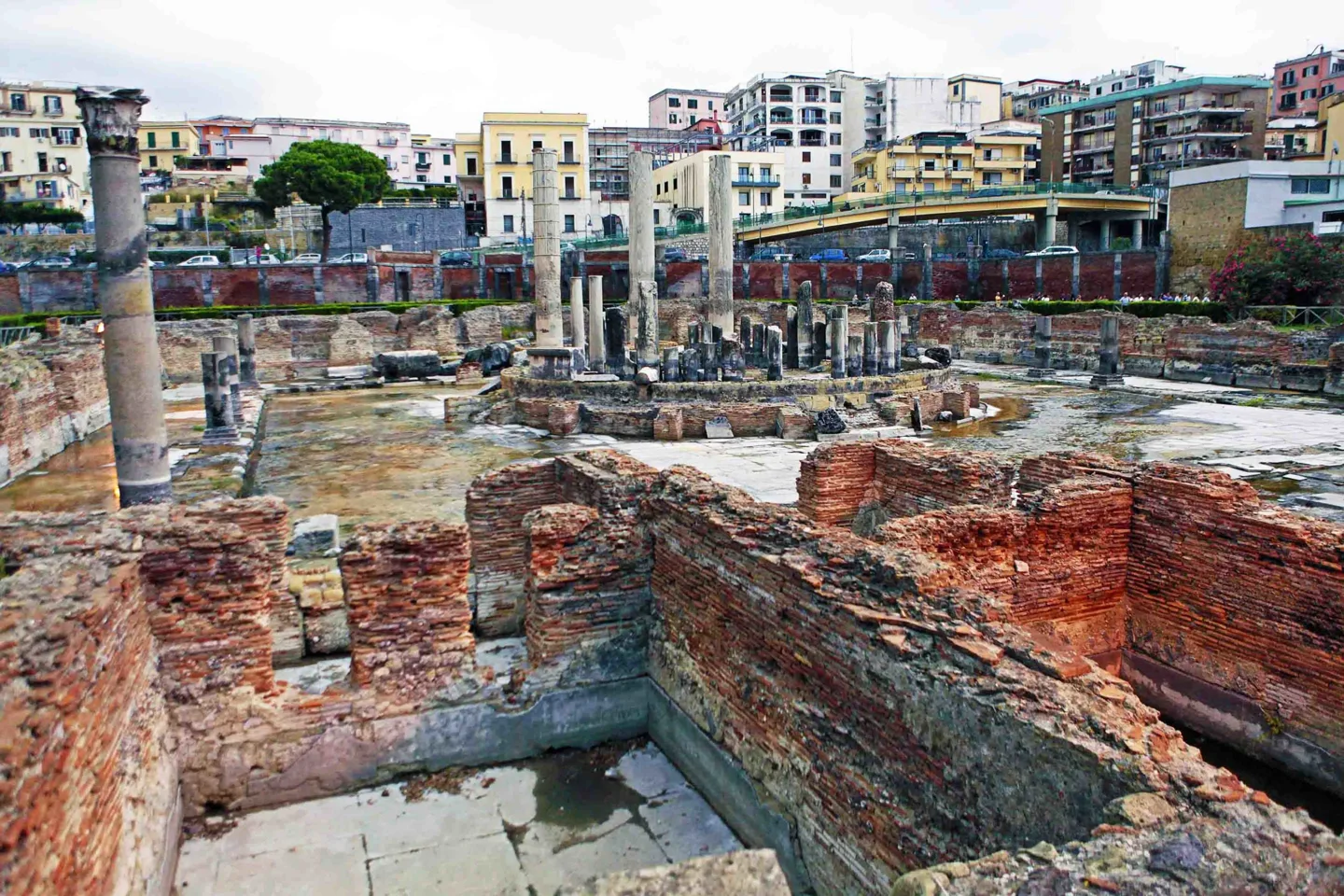
Frequently asked questions
Was it a temple?
No, it was a public market named after the discovery of a statue of Serapis.
Do the columns predict earthquakes?
No. They document past environmental conditions.