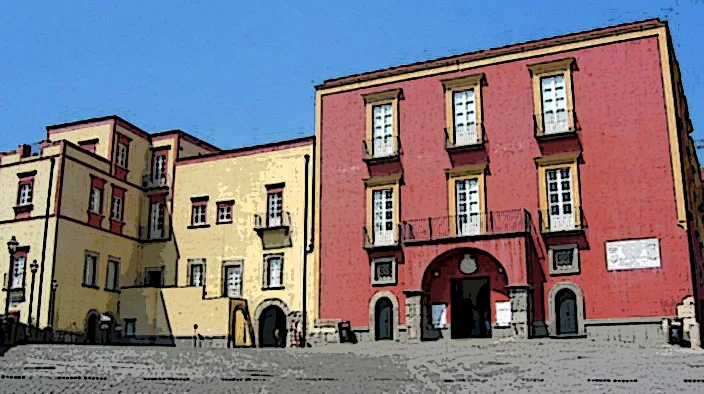
The Rosary and Saint Vincent Ferrer complex brings together religious life, thermal history and urban change.
LISTEN TO THE STORY
Audio guide
Voice settings
Read the transcript
The Rosary and Saint Vincent Ferrer complex brings together religious life, thermal history and urban change.
Local heritage documentation connects the complex with the Dominican convent of San Pietro and the church of Jesus and Mary, established in the early sixteenth century. It recalls the friars’ role in welcoming people in a town known for its thermal waters. Decorative changes followed in the eighteenth century; after the suppression of the convent, devotion to Saint Vincent Ferrer became significant during the nineteenth century.
A documented external triptych combines devotional imagery with a representation of Pozzuoli. The diocese confirms the present parish name. Exact dates for the individual building phases and the current condition of artworks need further archival study.
In later centuries new furnishings and devotional traditions transformed the church.
A documented image of the town alongside sacred figures shows how landscape and faith could share a single story.
This guide is designed to help you discover the site remotely as well. Respect closures and access restrictions.
History
Local heritage documentation connects the complex with the Dominican convent of San Pietro and the church of Jesus and Mary, established in the early sixteenth century. It recalls the friars’ role in welcoming people in a town known for its thermal waters. Decorative changes followed in the eighteenth century; after the suppression of the convent, devotion to Saint Vincent Ferrer became significant during the nineteenth century.
A documented external triptych combines devotional imagery with a representation of Pozzuoli. The diocese confirms the present parish name. Exact dates for the individual building phases and the current condition of artworks need further archival study.
What to notice
- The Dominican complex in historical records
- Rosary iconography
- The townscape in the documented triptych
Frequently asked questions
Why is it called Gesù a mare?
It is a traditional name associated with the history of the church of Jesus and Mary.
Can I visit the church?
The heritage authority report dated 24 November 2026 identifies concerns affecting this building. This guide is for remote reading: do not travel to the site for a visit until reopening and access have been officially confirmed.