The monument known as the Temple of Apollo recalls Roman bathing culture in one of the region’s most evocative landscapes.
LISTEN TO THE STORY
Audio guide
Voice settings
Read the transcript
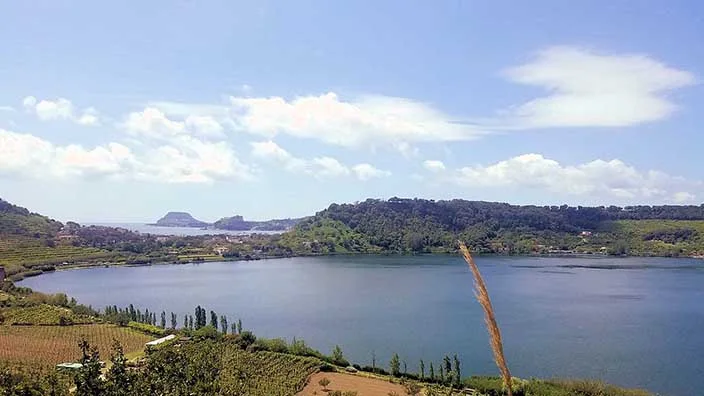
Lake Avernus is linked to ancient stories of the underworld.
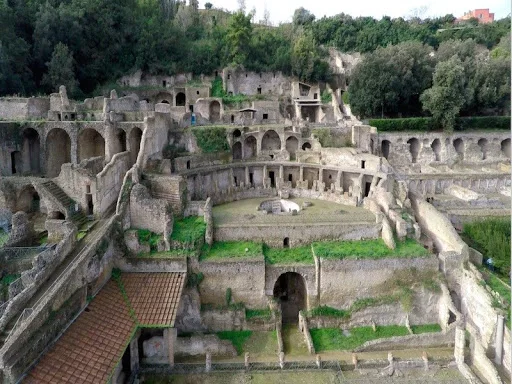
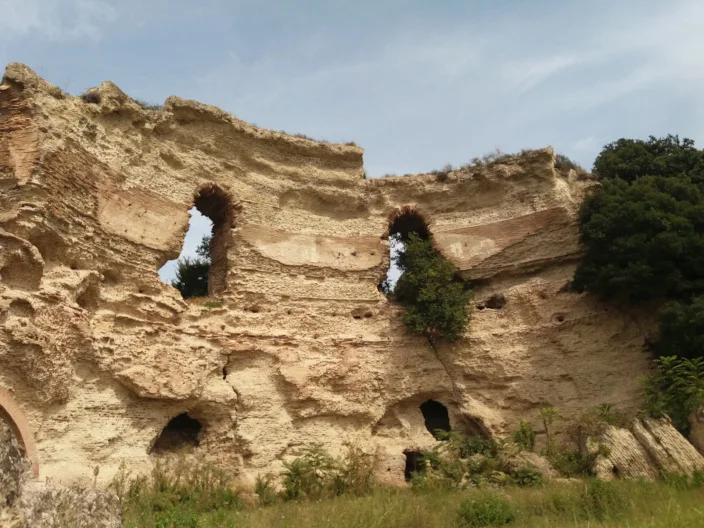
The name reflects early interpretations of the mythological landscape around Cumae. The park identifies a bathing complex developed in the first century AD and enlarged with an octagonal hall in the second. A dome is a plausible reconstruction rather than a surviving roof.
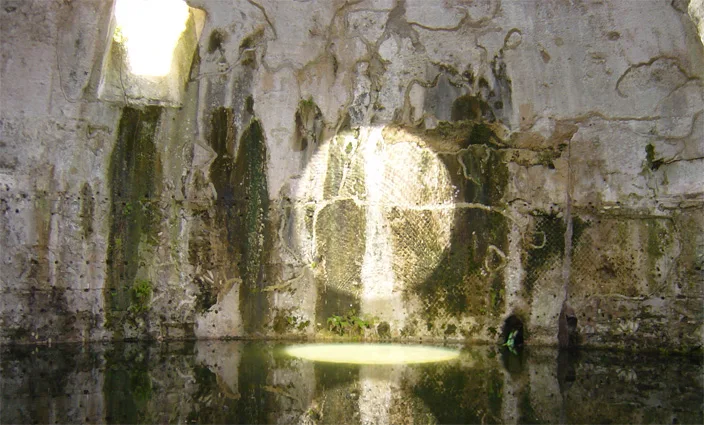
Natural heat and steam explain the choice of site, while ground-level changes help explain why part of the building is buried. Comparison with Baiae reveals architectural parallels without conflating separate buildings and functions.
But not every building named after a god was a temple.
Here architecture and thermal resources tell a different story, that of Roman bathing.
The traditional name still matters: it reveals how people interpreted ruins over the centuries.
History
The name reflects early interpretations of the mythological landscape around Cumae. The park identifies a bathing complex developed in the first century AD and enlarged with an octagonal hall in the second. A dome is a plausible reconstruction rather than a surviving roof.
Natural heat and steam explain the choice of site, while ground-level changes help explain why part of the building is buried. Comparison with Baiae reveals architectural parallels without conflating separate buildings and functions.
What to notice
- Octagonal plan
- Relationship between springs and architecture
- Traditional name versus archaeological function
Photo gallery
2 photos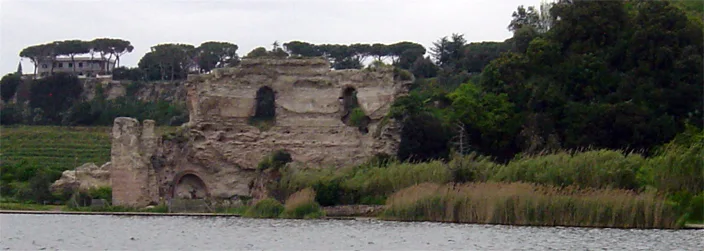
Frequently asked questions
Was it really a temple?
Archaeological interpretation identifies a bathing complex.