At Baia, leisure was an art. Terraces, mosaics and bathing rooms reveal the appeal this bay held for Rome’s elite.
LISTEN TO THE STORY
Audio guide
Voice settings
Read the transcript
A hillside overlooking the bay, terraces, decorated rooms and naturally heated water: Baia turned landscape into an experience of leisure.
Baia was where Roman society met the pleasures of coastal life. The elite sought the natural warmth beneath the ground, sweeping views of the bay and retreats from the politics of the capital. The hillside ruins preserve this culture of leisure, shaped by successive building phases from the late Republic through the Empire.
The slope inspired ingenious solutions. Retaining walls supported terraces; stairs and porticoes connected rooms at different heights. The Ambulatio illustrates architecture designed around the sea view, while the Sosandra complex reveals the use of natural heat. Mosaics, stone finishes and stucco evoke the sophisticated tastes of Roman patrons.
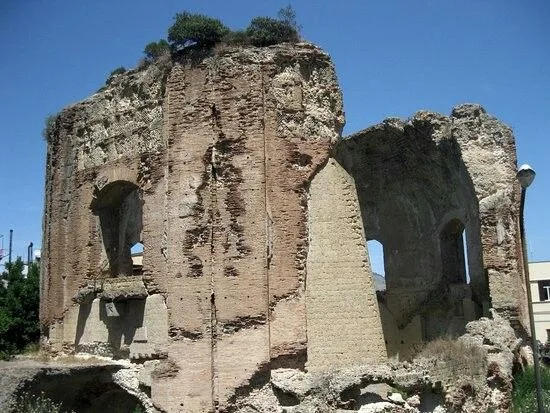
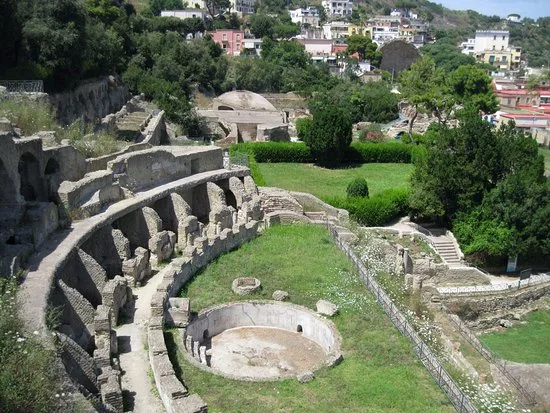
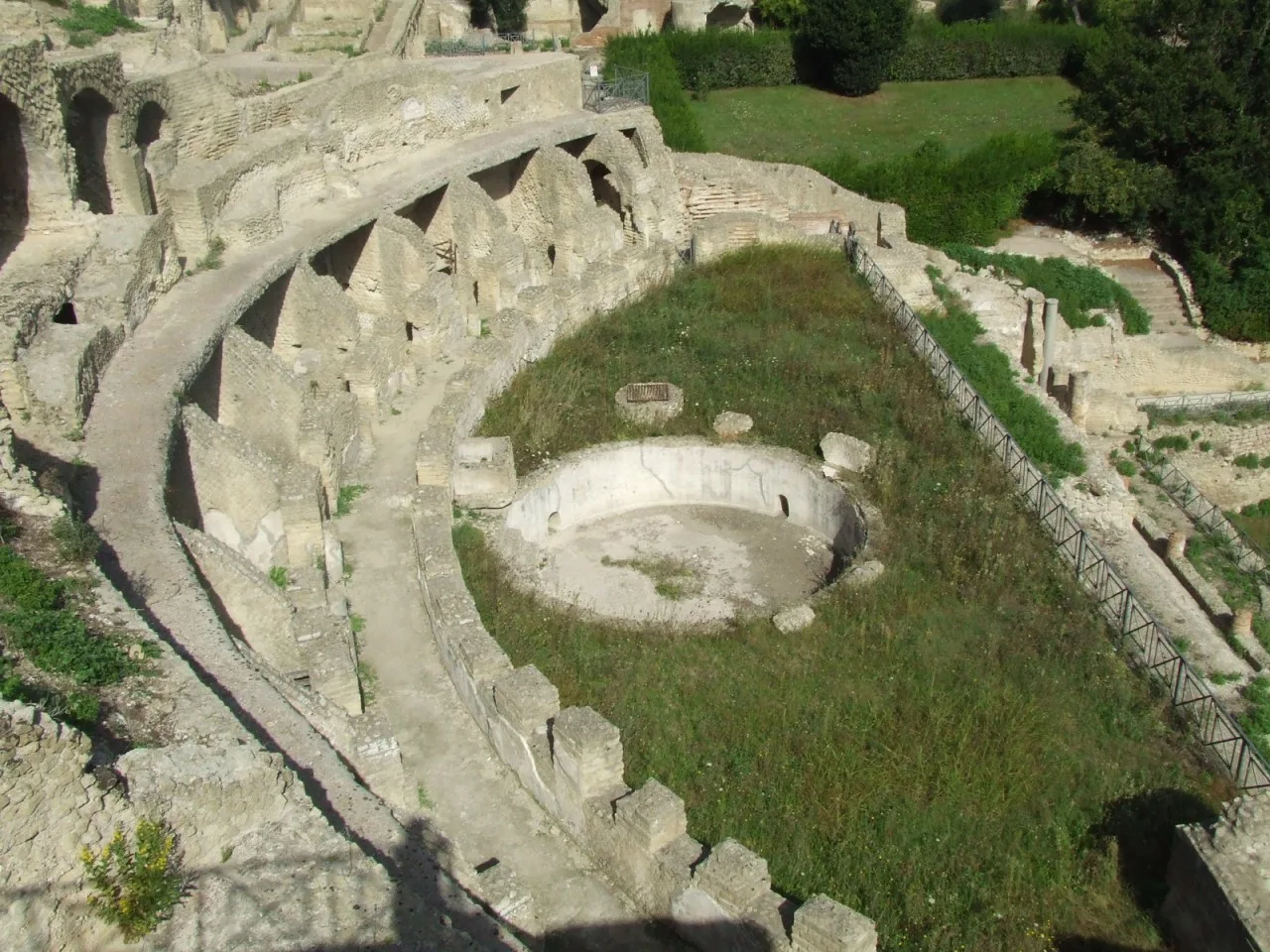
The circular room known as the Temple of Mercury demonstrates Roman skill in constructing domes. Its name, like those of Sosandra and Venus, reflects modern interpretation rather than certain religious use. The building called the Temple of Venus across the road is distinct from the park’s Venus sector.
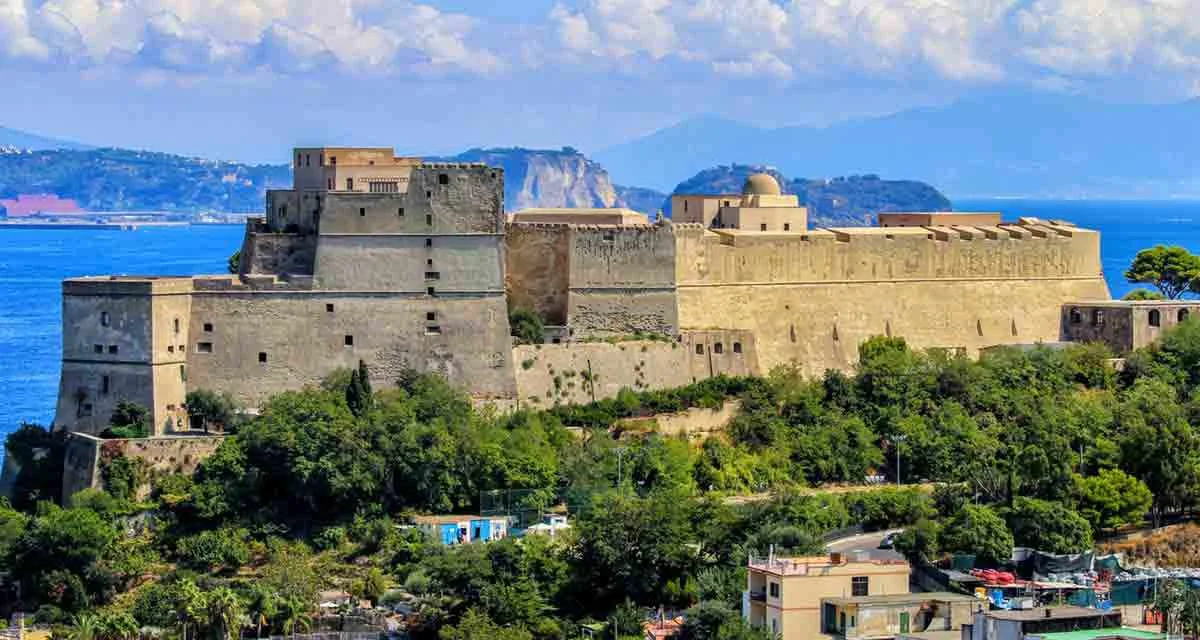
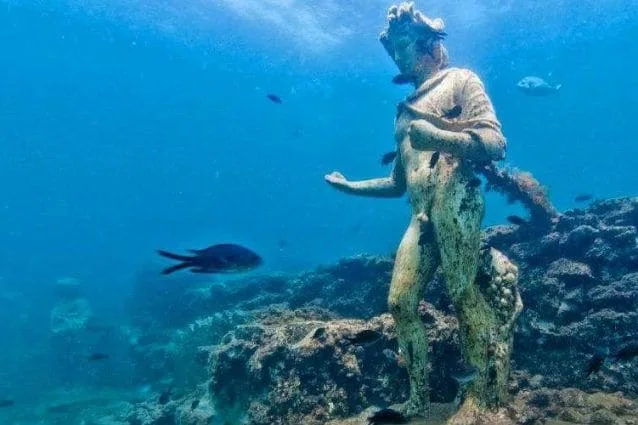
Twentieth-century excavations uncovered much of the complex. Baia’s story also continues beneath the sea, where changes in ground level submerged parts of the Roman landscape. The two archaeological areas share a history, but their access arrangements are separate.
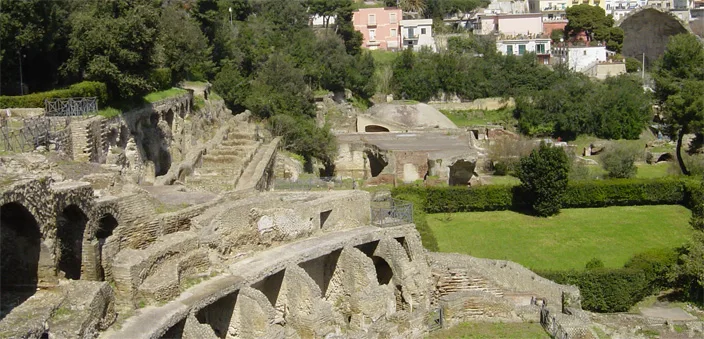
Roman builders worked with the changing levels of the slope.
Mercury, Sosandra and Venus are modern names that help us understand the ruins.
History
The Romans’ beloved Baia
Baia was where Roman society met the pleasures of coastal life. The elite sought the natural warmth beneath the ground, sweeping views of the bay and retreats from the politics of the capital. The hillside ruins preserve this culture of leisure, shaped by successive building phases from the late Republic through the Empire.
A hillside transformed by architecture
The slope inspired ingenious solutions. Retaining walls supported terraces; stairs and porticoes connected rooms at different heights. The Ambulatio illustrates architecture designed around the sea view, while the Sosandra complex reveals the use of natural heat. Mosaics, stone finishes and stucco evoke the sophisticated tastes of Roman patrons.
The bathing rooms and their secrets
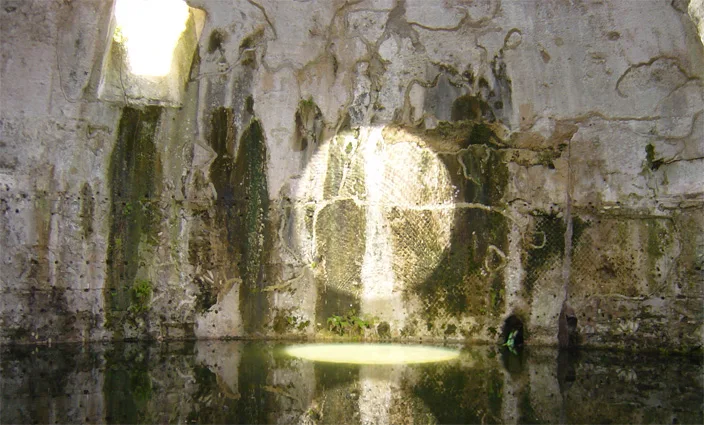
The circular room known as the Temple of Mercury demonstrates Roman skill in constructing domes. Its name, like those of Sosandra and Venus, reflects modern interpretation rather than certain religious use. The building called the Temple of Venus across the road is distinct from the park’s Venus sector.
A town between land and sea
Twentieth-century excavations uncovered much of the complex. Baia’s story also continues beneath the sea, where changes in ground level submerged parts of the Roman landscape. The two archaeological areas share a history, but their access arrangements are separate.
Architecture in numbers
Historical timeline
- Late Republic
Documented early building phases.
Source - Imperial period
Alterations and additions to bathing and residential groups.
Source - 20th century
Archaeological investigations on the hillside.
Source
What to notice
- Terraces: consider how walls retain the ground and how elevation changes the view of the bay.
- Differences between mosaic floors, finishes and masonry, without touching them.
- Curved spaces, viewed only from authorised areas.
- The historical relationship between hillside and coast, without confusing the land park with the underwater park.
Photo gallery
4 photos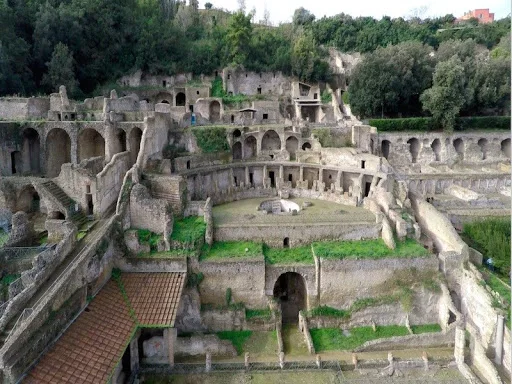
Frequently asked questions
Were the baths a single building?
No. The park preserves several groups of structures altered over time.
Were Mercury and Venus temples?
The traditional names do not establish religious use; these are bathing structures.
Is submerged Baia included?
The sites are historically related but have separate access arrangements.
Is a separate ticket needed for each sector?
Internal sectors are interpretive stops, not independent entrances. Check special visits with the operator.
What are the opening hours?
The official page refers to a seasonal timetable; check it before visiting.