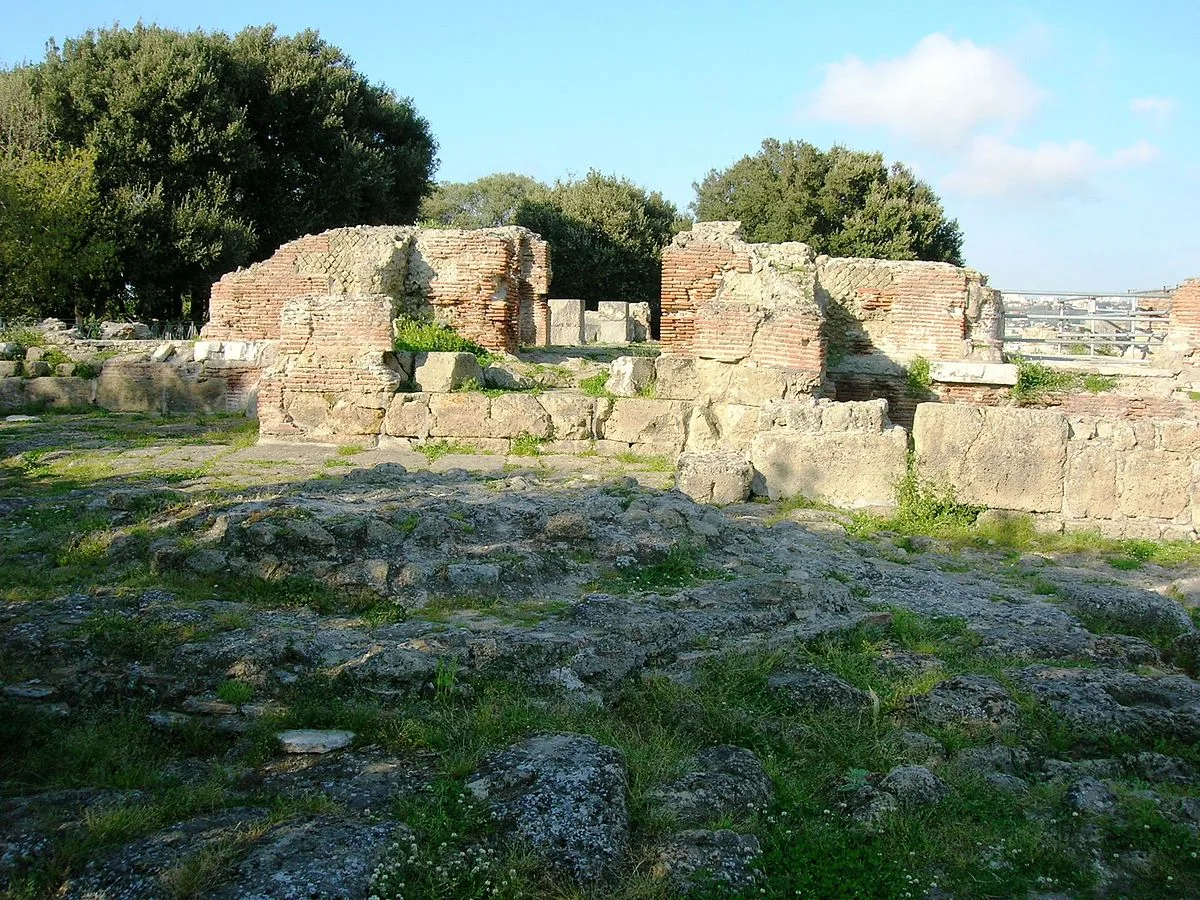
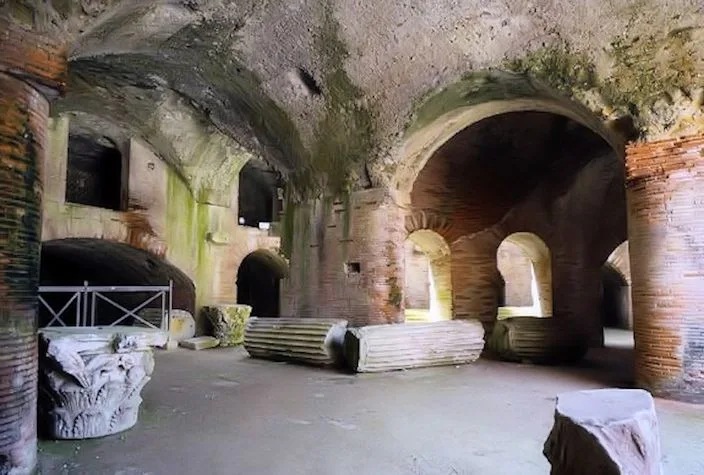
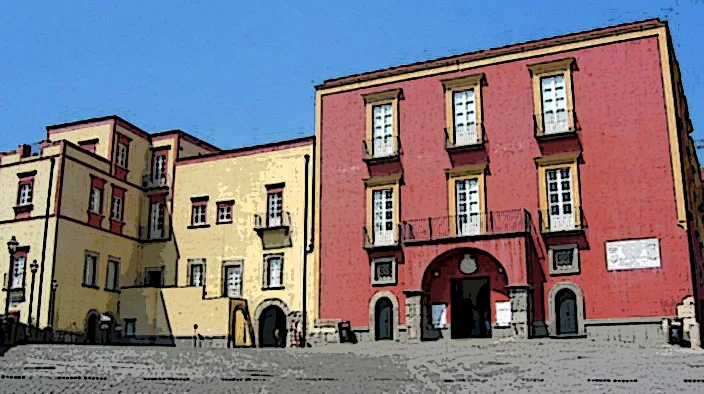
Cumae’s amphitheatre reveals how the city changed through a Roman public building devoted to spectacle.
LISTEN TO THE STORY
Audio guide
Voice settings
Read the transcript
Cumae is more than its acropolis and temples.
The archaeological park dates the building to the late second century BC. It stood outside the southern city walls, with the slope supporting part of the seating. Unlike the Flavian Amphitheatre at Pozzuoli, its earlier design had no underground arena spaces.
Excavations have uncovered only part of the structure; imperial-period alterations affected access and lower seating. A sanctuary above the stands occupied an earlier sacred site, subsequently incorporated into Villa Vergiliana.
Its amphitheatre tells the story of a town adapting to new forms of public life.
Compare this monument with the great arena at Pozzuoli to understand the variety of Roman architectural solutions.
History
The archaeological park dates the building to the late second century BC. It stood outside the southern city walls, with the slope supporting part of the seating. Unlike the Flavian Amphitheatre at Pozzuoli, its earlier design had no underground arena spaces.
Excavations have uncovered only part of the structure; imperial-period alterations affected access and lower seating. A sanctuary above the stands occupied an earlier sacred site, subsequently incorporated into Villa Vergiliana.
What to notice
- Seating and hillside
- Contrast with the amphitheatre at Pozzuoli
- Layers of religious and residential architecture
Photo gallery
1 photo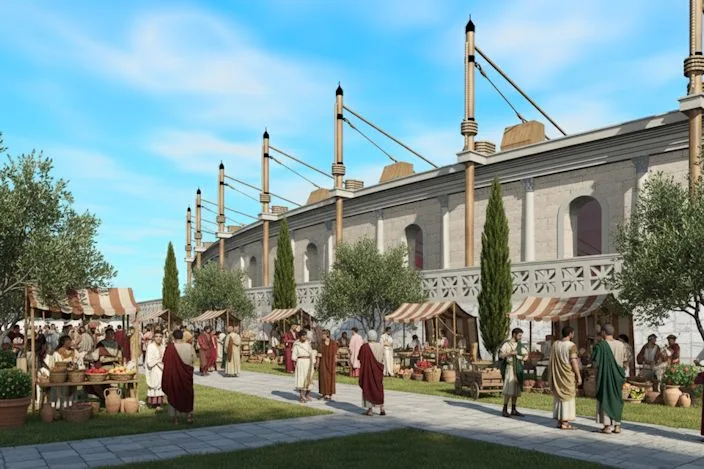
Frequently asked questions
Can I enter freely?
The park lists booked visits for at least five people; availability needs confirmation.