Solfatara reveals Phlegraean volcanism through gas, heat and fluids. A scientific guide, not an invitation to enter the crater.
LISTEN TO THE STORY
Audio guide
Voice settings
Read the transcript
Solfatara reveals Phlegraean volcanism through gas, heat and fluids. A scientific guide, not an invitation to enter the crater.
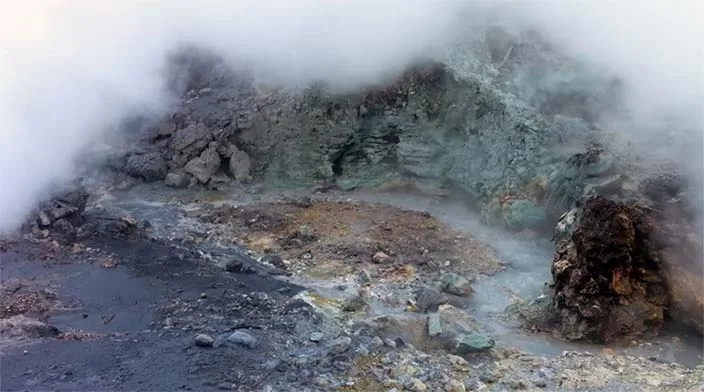
Heat and fluids rising through the subsurface create fumarolic phenomena and alter the rocks within the crater. Steam is not evidence of an eruption in progress. Scientists study variations in the volcanic system by combining observations of emissions with seismic and ground deformation measurements.
The park’s descriptions also document historical uses of mineral and thermal resources. Conservation and safety take priority today: this guide does not propose a visit or alternative access points.
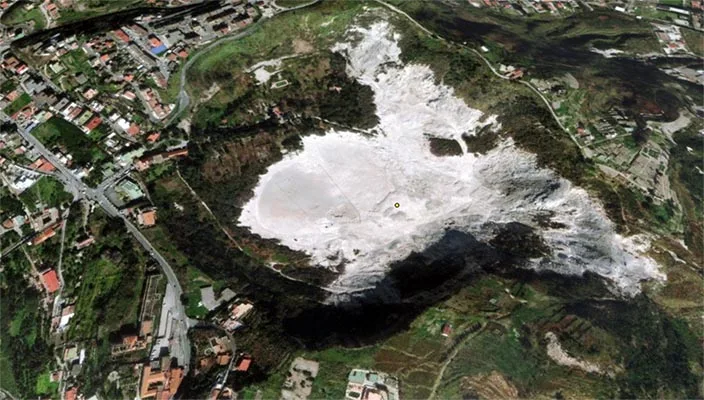
At Solfatara, fluid emissions and changes in the rocks reveal a complex system underground.
Researchers compare different measurements to understand the caldera; no single observation is sufficient on its own.
This guide is designed to help you discover the site remotely as well. Respect closures and access restrictions.
History
Heat and fluids rising through the subsurface create fumarolic phenomena and alter the rocks within the crater. Steam is not evidence of an eruption in progress. Scientists study variations in the volcanic system by combining observations of emissions with seismic and ground deformation measurements.
The park’s descriptions also document historical uses of mineral and thermal resources. Conservation and safety take priority today: this guide does not propose a visit or alternative access points.
What to notice
- Colour changes in documentary photographs
- Difference between a fumarole and an eruption
- Relationship with the Pisciarelli hydrothermal system
Photo gallery
2 photos
Frequently asked questions
Can I visit?
No official reopening confirmation was found; do not attempt entry.
Does steam mean an eruption?
No. Hydrothermal emissions are not the same as an eruption.